Children, Climate Resilience and Community Action
Location: Kolkata, the Asansol coal belt and the Sundarbans (South 24 Parganas)
Our approach recognises that climate change disproportionately affects children in vulnerable communities, increasing risks related to disasters, displacement, unsafe migration, school disruption, child marriage, violence, disability, and loss of livelihoods. We therefore connect climate resilience with child protection, gender equality, psychosocial wellbeing, and meaningful child participation.
Our Approach
Child-Centred Disaster Risk Reduction
Through the Sankalpa initiative, Praajak works with schools, ICDS centres, Panchayats, children, and communities in the Sundarbans to strengthen child-centred disaster preparedness and response. Children explore how climate and disasters can intensify risks such as child marriage, unsafe migration, school dropout, violence, abuse, and exclusion. Teachers, ICDS and ASHA workers, Panchayat representatives, and community stakeholders are also strengthened to identify vulnerabilities and facilitate appropriate support.
From Climate Learning to Community Action
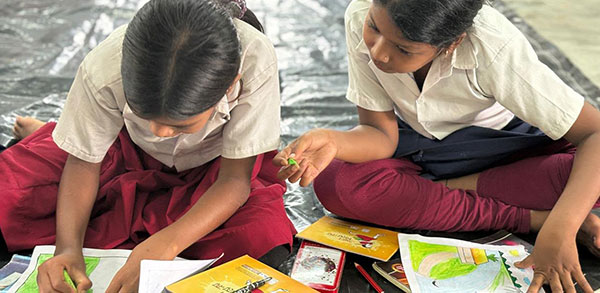
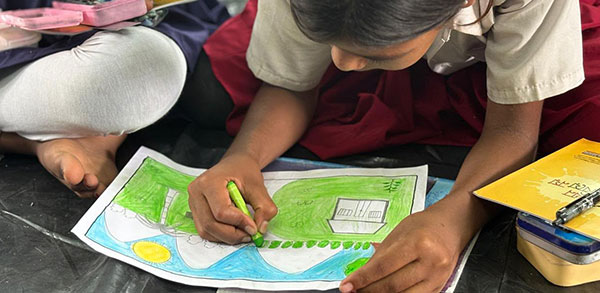
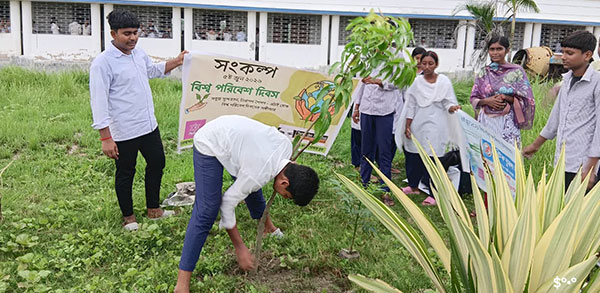
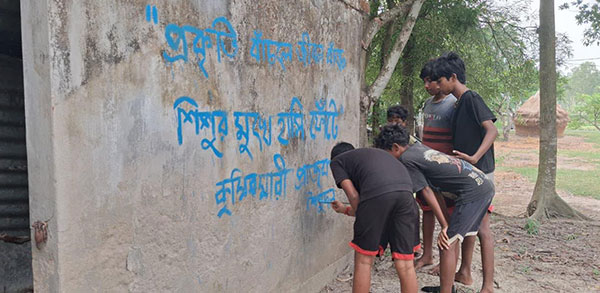
Children and adolescents are supported to lead campaigns, social action initiatives, awareness events, and community dialogues on climate change, disaster preparedness, gender equality, child protection, safe migration, and environmental sustainability. They are also encouraged to participate in local planning processes, including Gram Panchayat Development Plan consultations.
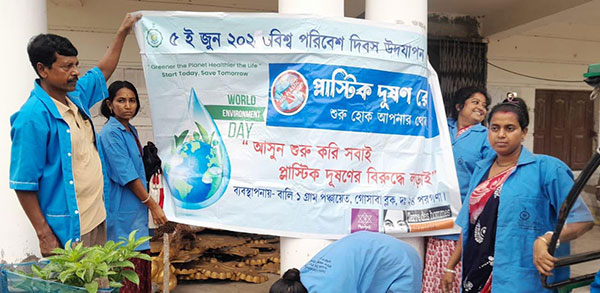
In Kolkata, school-based Eco Clubs provide a complementary platform for children to address urban climate concerns such as waste management, sustainable mobility, air quality, and environmental sustainability.
Connecting Climate Resilience with Child Protection
Climate vulnerability and child protection are closely connected. School Child Support Help Desks, including the “Moner Katha Box,” enable children to raise concerns and access support. Teachers and community stakeholders are supported to identify and refer cases involving child marriage, school dropout, disability, child labour, abuse, unsafe migration, and psychosocial distress.
Community-based child protection mechanisms, including Gram Panchayat Level Child Protection Committees, are strengthened alongside Climate Clubs to create stronger local systems for responding to children’s protection and climate-related vulnerabilities.
Building Climate Clubs of Adolescents
Climate Clubs provide adolescents with sustained spaces for climate learning, leadership, peer engagement, and collective action. Through experiential learning, reflection, sports, campaigns, and social action, adolescents explore climate change, disaster preparedness, gender, child rights, safe migration, and community resilience. They identify local risks, develop solutions, engage families and institutions, and advocate for safer communities.
Emerging Change
Children and adolescents are developing greater knowledge of climate change, disaster preparedness, child rights, gender equality, disability, and environmental sustainability. Through Climate Clubs and child-led action, they are increasingly becoming climate leaders and community changemakers, developing confidence, communication, leadership, decision-making, teamwork, and problem-solving skills.
School and community mechanisms have also strengthened early identification and response to child protection concerns, including child marriage, school dropout, disability, child labour, unsafe migration, and abuse, enabling referrals, family support, and follow-up.
Vision
Praajak envisions communities where children and adolescents are recognised not only as those most affected by climate change, but as active leaders in building climate-resilient futures. We aim to strengthen Climate Clubs of Adolescents as sustainable platforms for learning, peer support, community action, and advocacy, connected with schools, Panchayats, families, and community organisations.
Our vision is for every child, regardless of gender, disability, or socio-economic circumstances, to grow up in a safe, inclusive, climate-resilient community and have the knowledge, confidence, and collective power to shape its future.
Key partners and systems engaged: Terre des homes, Asar Social Impact Advisors, Southern Voices, Child Rights and You, Family for Every Child, West Bengal Commission for Protection of Child Rights, Directorate of Child Rights and Trafficking, Schools, Gram Panchayats, Child Protection Committees, ASHA and Anganwadi workers, teachers, Panchayat representatives, Urban local government officials and civic stakeholders, community-based organisations, and relevant government institutions.
Celebrating everyday stories of courage, collaboration, and positive change