Alternatives to Detention, Care Reform and Community-Based Protection
Strengthening Child Justice and Alternatives to Detention
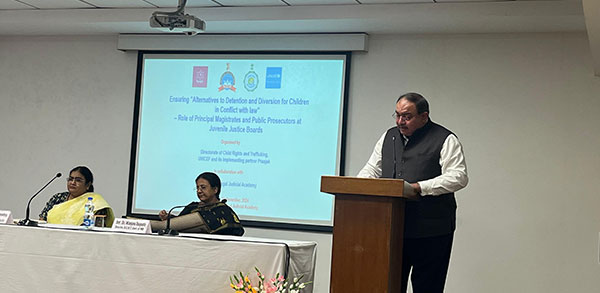
Since 2018, Praajak has worked to promote diversion and alternatives to detention for children in conflict with the law. The initiative seeks to strengthen the child justice system so that rehabilitation and reintegration are prioritised over punitive and custodial responses.
Through referrals from Juvenile Justice Boards and the police, 51 children in conflict with the law have been supported through case management, diversion, and alternative-to-detention approaches, with rehabilitation anchored in families and communities. The work recognises that children who come into conflict with the law often experience intersecting vulnerabilities such as poverty, neglect, abuse, violence, family difficulties, exclusion, and limited access to supportive services.
Alongside individual support, Praajak has developed community-based preventive approaches that include positive parenting, gender and masculinities work, youth leadership, and adolescent collectives. These approaches seek to address vulnerabilities before they escalate and strengthen the capacity of families and communities to support children.
Preventing Child Marriage and Strengthening Access to Justice
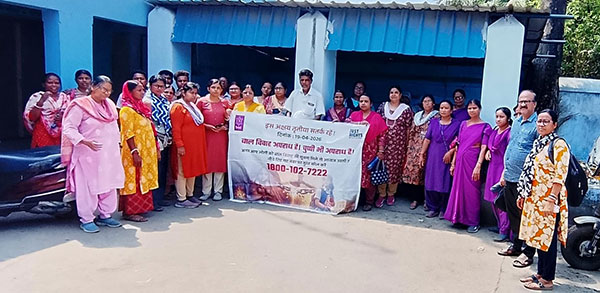
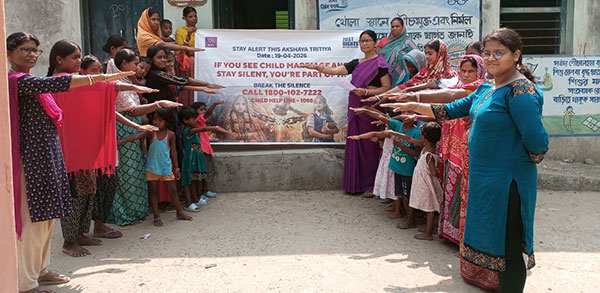
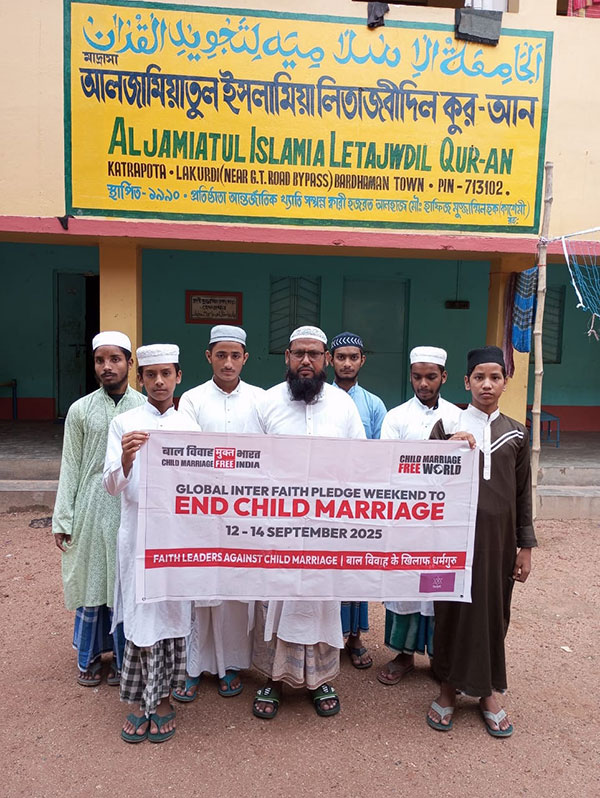
In partnership with Just Rights for Children (JRC), Praajak implements the Child Marriage Free India initiative in Purba Bardhaman and Paschim Bardhaman. The initiative works to prevent child marriage through community mobilisation, legal awareness, adolescent leadership, institutional strengthening, and community-based child protection mechanisms.
The programme currently covers 2 districts, 15 blocks, 20 Gram Panchayats, and 200 villages, directly engaging 1,310 children and working closely with families, Panchayat representatives, teachers, ASHA and Anganwadi workers, Child Protection Committees, religious leaders, community members, and government stakeholders.
The approach combines prevention with access to justice and protection. Village-level monitoring and reporting mechanisms support early identification of children at risk of child marriage, while awareness and capacity-building initiatives strengthen understanding of child rights, gender equality, education, and the legal framework protecting children. Adolescents are supported to participate in youth groups and leadership platforms, while families are connected to education and government welfare schemes where needed.
By strengthening community vigilance and local accountability, the initiative enables communities to identify risks earlier, support children and families, and connect children at risk with appropriate protection mechanisms and services. This contributes to the broader Child Marriage Free India movement and the vision of creating communities where children can remain in education, exercise their rights, and make informed choices about their futures.
Strengthening Family-Based Care and Care Reform
Praajak’s commitment to family-based care extends beyond the child justice system. As part of the global Family for Every Child network, we contribute to efforts to strengthen care reform and promote family and community-based alternatives to institutional care.
A particular area of work is kinship care—care provided within children’s extended family and kinship networks. Although kinship care is culturally embedded and widely practised in many communities, it remains insufficiently recognised within formal approaches to alternative family care. Praajak has been documenting this practice and generating evidence over several years, including through research, to contribute to a stronger understanding of kinship care and its potential within child protection and care systems.
We also work with families and communities to strengthen positive parenting and protective relationships, recognising that family strengthening and prevention are essential to reducing unnecessary separation and supporting children’s wellbeing within their communities.
Supporting Care Leavers and Successful Reintegration
Praajak places particular emphasis on collectivising care leavers and strengthening their leadership. Platforms for young people with lived experience of institutional care enable them to connect, build collective identities, develop leadership, and support one another.
Care leavers can also become mentors and positive role models for children and young people transitioning through institutional aftercare. This peer-led approach creates pathways for safer and more successful transitions into families, communities, education, livelihoods, and independent adulthood, while ensuring that care leavers themselves have a meaningful voice in shaping care and aftercare systems.
Connecting Children and Families to Protection and Justice Services
Through our accessible support and referral services, Praajak provides a bridge between children, families, communities, and the wider child protection system. We support children and families to understand and access appropriate services and strengthen linkages with statutory mechanisms, including Child Welfare Committees (CWCs), Juvenile Justice Boards (JJBs), and services under Mission Vatsalya.
Our work also contributes to the implementation of child protection services through the provision of Support Persons for survivors of sexual offences under POCSO. This support helps children and families navigate legal and protection processes, access information and appropriate services, and remain connected to the wider support system.
By linking community-level engagement with statutory mechanisms, Praajak contributes to making child protection and justice services more accessible, responsive, coordinated, and child-friendly.
Our Approach
- Strengthening access to justice and community-based child protection.
- Preventing child marriage through community mobilisation, adolescent leadership, legal awareness, and local accountability.
- Promoting diversion, rehabilitation, and alternatives to detention for children in conflict with the law.
- Strengthening family-centred and community-based approaches to rehabilitation and reintegration.
- Promoting positive parenting and strengthening families to prevent unnecessary separation.
- Generating evidence on kinship care and contributing to family-based care reform.
- Building leadership and peer support among care leavers to strengthen transitions from institutional care.
- Connecting children and families with CWCs, JJBs, Mission Vatsalya services, and other appropriate protection mechanisms.
- Providing Support Person services for children and families affected by sexual offences under POCSO.
- Strengthening collaboration among children, families, communities, civil society, and statutory child protection and justice institutions.
Vision
Praajak envisions a child protection and justice ecosystem where children can access justice and protection without being further harmed by punitive or institutional responses; where families and communities are strengthened to care for children; and where every child can participate in decisions affecting their lives.
Through prevention, access to justice, community-based protection, care reform, family strengthening, and youth leadership, we seek to build pathways that enable children to remain safely connected to families and communities wherever possible, while ensuring appropriate protection and support when they need it.
Key geographic focus: Murshidabad, South 24 Parganas, Malda, Jalpaiguri, Darjeeling, Purba Bardhaman and Paschim Bardhaman.
Key partners and systems engaged: UNICEF, Just Rights for Children, West Bengal Commission for Protection of Child Rights, Directorate of Child Rights and Trafficking, West Bengal Judicial Academy, Swami Vivekananda State Police Academy, Child Welfare Committees, Juvenile Justice Boards, Police, District Child Protection Units, Panchayati Raj institutions, ASHA workers, ICDS workers, schools, families, and local youth groups.
Celebrating everyday stories of courage, collaboration, and positive change